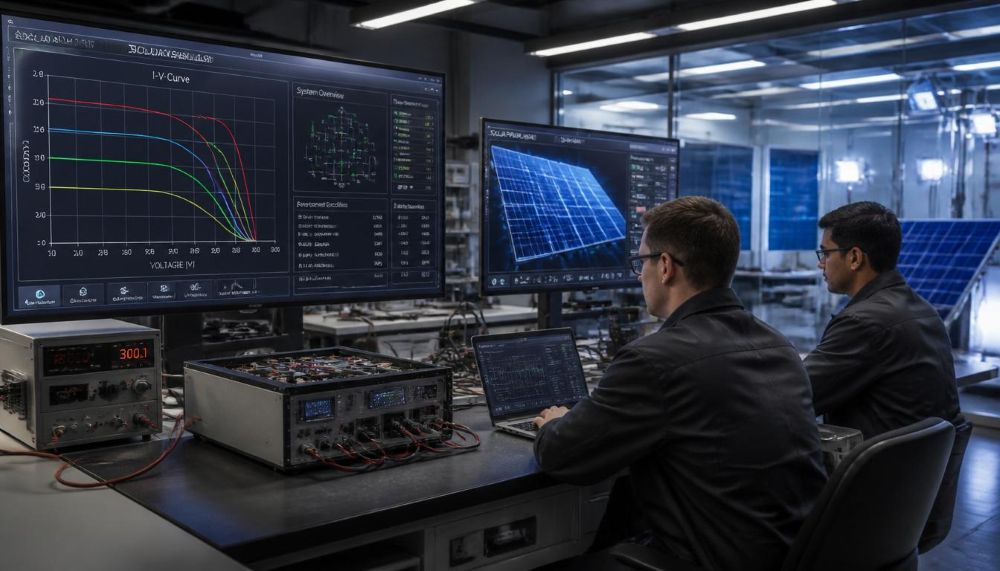
As the renewable energy industry continues to grow, itech sas software has become an important tool for solar inverter testing and photovoltaic simulation in modern engineering environments. As governments, businesses, and homeowners continue shifting toward clean energy solutions, solar technology has become one of the most important sectors in the global power market.
However, building reliable photovoltaic systems requires much more than simply manufacturing solar panels. Engineers and developers must carefully test solar inverters, energy storage systems, MPPT algorithms, and photovoltaic performance under different environmental conditions.
This is where itech sas software (SAS1000 Solar Array Simulation Software) becomes highly valuable for industrial photovoltaic testing and inverter simulation. Developed by ITECH Electronic, this advanced photovoltaic simulation platform is designed for industrial testing, inverter validation, renewable energy research, and solar array performance analysis.
Unlike basic solar testing tools, SAS1000 can accurately simulate real-world photovoltaic conditions inside a laboratory environment. It supports high-voltage testing, dynamic I-V curve simulation, MPPT efficiency analysis, shadow simulation, and multiple international photovoltaic testing standards.
In this detailed review, we will explore everything about SAS1000 Solar Array Simulation Software, including its features, applications, benefits, working mechanism, limitations, and why it is considered an important solution for modern photovoltaic testing.
What is ITECH SAS Software?
SAS1000 Solar Array Simulation Software is a professional photovoltaic simulation platform used together with ITECH high-performance DC power supplies. The software is specifically designed to simulate solar panel behavior under realistic environmental conditions.
Instead of relying on outdoor sunlight, engineers can use SAS1000 to recreate solar array performance directly inside a controlled laboratory environment. This allows manufacturers and researchers to test photovoltaic inverters and solar systems with high precision.
The software can simulate:
- Temperature variations
- Different irradiation levels
- Dynamic sunlight conditions
- MPPT tracking behavior
Because the software supports voltage up to 2250V and expandable power up to 10MW, it is suitable for large-scale industrial photovoltaic testing projects.
Why Solar Simulation Software Matters
Solar energy systems operate under constantly changing environmental conditions. Weather changes, cloud cover, seasonal variations, temperature fluctuations, dust accumulation, and shadows all affect the efficiency of solar panels.
Testing photovoltaic equipment outdoors can be difficult because environmental conditions are unpredictable. A cloudy day can completely change testing results, making accurate performance analysis more complicated.
Solar simulation software solves this problem by creating stable and repeatable testing conditions. With SAS1000, engineers can:
- Reproduce identical solar conditions repeatedly
- Test inverter performance accurately
- Analyze MPPT efficiency
This level of precision is extremely important for inverter manufacturers and renewable energy companies.
Understanding Photovoltaic I-V Curve Simulation
One of the most important functions of SAS1000 is its ability to simulate photovoltaic I-V curves. An I-V curve represents the relationship between the current and voltage produced by a solar panel.
These curves help engineers understand how a photovoltaic system behaves under different operating conditions. The basic electrical power equation used in photovoltaic systems is:
P=V×IP = V \times IP=V×I
Where:
- PPP represents power
- VVV represents voltage
- III represents current
As sunlight intensity and temperature change, the voltage and current characteristics of solar panels also change. SAS1000 accurately simulates these conditions using built-in mathematical models. This allows engineers to evaluate:
- Maximum power output
- Voltage stability
- Current efficiency
- MPPT performance
- Dynamic photovoltaic behavior
The software can also simulate different solar cell technologies, including monocrystalline, polycrystalline, and thin-film solar cells.
Key Features of SAS1000 Solar Array Simulation Software
High Voltage and High Power Output
One of the biggest advantages of SAS1000 is its industrial-level output capability. The platform supports:
- Voltage up to 2250V
- Current up to 2040A
- Expandable power up to 10MW
This makes the system suitable for large-scale photovoltaic projects and industrial research laboratories.
Unlike small consumer-grade solar simulators, SAS1000 is designed for professional testing environments where high-performance power simulation is required.
Advanced MPPT Testing
Maximum Power Point Tracking, commonly known as MPPT, is one of the most important technologies used in modern solar inverters.
MPPT systems continuously adjust operating conditions to ensure that solar panels produce maximum power output at all times. SAS1000 supports both static and dynamic MPPT testing.
Static MPPT Testing
Static testing evaluates how effectively the inverter maintains the maximum power point under steady operating conditions.
Dynamic MPPT Testing
Dynamic testing analyzes inverter performance when environmental conditions change rapidly, such as moving clouds or sudden temperature variations. The software includes several built-in photovoltaic testing standards, including:
- EN50530
- Sandia
- NB/T32004
- CGC/GF004
- CGC/GF035
These standards are widely used in the photovoltaic industry for inverter validation and certification.
Shadow Mode Simulation
In real-world solar installations, partial shading is a common problem. Buildings, trees, clouds, dirt, and other obstacles can block sunlight from reaching parts of the solar array. This creates complex power output conditions that affect inverter efficiency. SAS1000 includes an advanced Shadow Mode feature that allows engineers to simulate:
- Partial shading
- Cloud movement
- Dynamic shadow effects
- Changing irradiation patterns
- Multiple shading conditions
The software can simulate moving cloud shadows across solar arrays in real time. Shadow simulation is extremely important because poor MPPT performance under shaded conditions can significantly reduce energy production.
Graphical User Interface and Monitoring
SAS1000 includes a graphical software interface designed for real-time monitoring and testing management. The interface allows users to:
- Display I-V curves
- Monitor MPPT tracking status
- Analyze photovoltaic performance
- Record testing data
- Generate professional reports
- Compare testing results
The graphical layout improves usability during long testing procedures and helps engineers visualize system behavior more effectively. Users can also program multiple test conditions directly from the interface.
Support for Multiple Solar Cell Technologies
SAS1000 supports simulation for various solar cell types, including:
- Monocrystalline silicon cells
- Polycrystalline silicon cells
- Thin-film solar cells
This flexibility allows engineers to test a wide range of photovoltaic systems using a single simulation platform. The software also supports Fill Factor simulation, which is an important measurement used to evaluate solar cell efficiency.
Multi-Channel MPPT Testing
Another major advantage of SAS1000 is its support for multi-channel testing. The platform supports up to 20 solar cell power supplies simultaneously. This is useful for:
- Large photovoltaic systems
- Multi-string solar arrays
- Industrial inverter testing
- Smart grid research
Multi-channel testing allows engineers to simulate complex photovoltaic systems with greater accuracy.
Applications of SAS1000 Solar Array Simulation Software
Solar Inverter Design and Validation
One of the primary uses of SAS1000 is photovoltaic inverter testing. Manufacturers use the software to verify:
- MPPT algorithms
- Inverter startup voltage
- Maximum input current
- Electrical protection systems
- Dynamic response behavior
By testing inverters under simulated real-world conditions, companies can improve product reliability before commercial release.
Renewable Energy Research Laboratories
Research institutions use SAS1000 for advanced photovoltaic experiments and renewable energy development. The software supports:
- Solar efficiency analysis
- Energy optimization research
- Dynamic solar testing
- Performance benchmarking
Because environmental conditions can be controlled precisely, researchers can collect more accurate data compared to outdoor testing.
Energy Storage System Testing
Modern renewable energy systems often combine solar panels with battery storage systems. SAS1000 can test:
- Energy storage performance
- Battery charging behavior
- Micro-grid systems
- DC terminal protection
- Hybrid renewable systems
This makes the platform valuable for advanced energy infrastructure projects.
Industrial Advantages of SAS1000
Accurate Laboratory Simulation
The software reproduces realistic solar conditions without relying on outdoor weather.
High-Speed Dynamic Response
Fast response times improve testing precision during dynamic environmental simulations.
Repeatable Testing Conditions
Engineers can repeat identical testing scenarios multiple times for accurate analysis.
Built-In International Standards
Pre-configured testing procedures reduce setup complexity.
Real-Time Data Monitoring
The graphical interface allows continuous performance tracking and analysis.
Limitations of SAS1000 Solar Array Simulation Software
Although SAS1000 offers powerful industrial capabilities, it also has some limitations.
Requires Technical Expertise
The software is mainly built for engineers and technical experts, so beginners may find it challenging to use.
Hardware Dependency
SAS1000 operates with specialized ITECH power supply systems, which can make the overall setup more expensive.
Industrial-Level Pricing
Because the platform is designed for professional laboratories, the overall investment may be expensive for small businesses or individual users.
Not Intended for Residential Solar Users
Residential solar installers and casual users may not require such advanced simulation features.
Who Should Use SAS1000?
SAS1000 is ideal for:
- Solar inverter manufacturers
- Electrical engineering companies
- Smart grid developers
- Industrial automation firms
- Research institutions
- Photovoltaic testing facilities
Organizations involved in photovoltaic innovation and inverter development can benefit the most from this platform.
SAS1000 vs Traditional Solar Testing Methods
Traditional outdoor solar testing depends heavily on environmental conditions. Weather changes can interrupt experiments and create inconsistent data.
SAS1000 provides several advantages over outdoor testing:
| Feature | Traditional Testing | SAS1000 |
| Weather Dependency | High | None |
| Repeatability | Limited | Excellent |
| Dynamic Shadow Simulation | Difficult | Advanced |
| Real-Time Monitoring | Limited | Full Support |
| MPPT Testing Accuracy | Moderate | High |
| Laboratory Use | Limited | Designed for Labs |
Because of these advantages, simulation-based testing is becoming increasingly important in the photovoltaic industry.
Is SAS1000 Worth It?
For industrial photovoltaic applications, SAS1000 provides advanced testing capabilities that significantly improve solar inverter validation and renewable energy research.
Its ability to simulate:
- Real-world solar behavior
- Dynamic environmental changes
- MPPT tracking conditions
- High-voltage photovoltaic systems
- Complex shading scenarios
makes it a valuable solution for professional engineering environments. While the platform may not be suitable for casual users, it offers strong benefits for organizations focused on solar technology development.
Final Verdict
ITECH SAS software is a powerful industrial photovoltaic simulation platform designed for high-performance solar inverter testing and renewable energy research.
The software combines advanced I-V curve simulation, dynamic MPPT testing, shadow mode functionality, real-time monitoring, and support for international photovoltaic testing standards. With support for voltage up to 2250V and expandable power up to 10MW, ITECH SAS software is built for professional laboratories and industrial-scale renewable energy projects.
For engineers, inverter manufacturers, and renewable energy researchers looking for accurate photovoltaic simulation and advanced solar testing capabilities, ITECH SAS software remains a highly capable and reliable solution in the modern solar industry.
Frequently Asked Questions
1.What is SAS1000 Solar Array Simulation Software used for?
SAS1000 Solar Array Simulation Software is mainly used for photovoltaic testing, solar inverter validation, MPPT performance analysis, and solar array simulation in laboratory environments. It helps engineers simulate real solar panel behavior without relying on outdoor sunlight.
2.Can SAS1000 simulate real-world solar conditions?
Yes, the software can simulate various real-world solar conditions, including temperature changes, irradiation levels, cloud movement, partial shading, and dynamic shadow effects. This allows accurate photovoltaic system testing under controlled laboratory conditions.
3.What is MPPT testing in SAS1000?
MPPT stands for Maximum Power Point Tracking. SAS1000 helps engineers test how efficiently a photovoltaic inverter tracks the maximum power point of a solar panel under both stable and changing environmental conditions.
4. Which industries use SAS1000 Solar Array Simulation Software?
ITECH SAS software is commonly used in several industries related to renewable energy, photovoltaic testing, and industrial engineering. These include:
- Renewable energy laboratories
- Solar inverter manufacturing companies
- Electrical engineering firms
- Photovoltaic research centers
- Smart grid development projects
- Industrial automation environments
- Solar energy testing facilities
5.Does SAS1000 support different types of solar cells?
Yes, SAS1000 supports simulation for multiple solar cell technologies, including monocrystalline silicon cells, polycrystalline silicon cells, and thin-film solar cells.
6. Is SAS1000 suitable for beginners or home users?
No, ITECH SAS software is mainly designed for professional and industrial applications. It requires technical expertise and specialized hardware systems, making it more suitable for engineers, manufacturers, and research laboratories than residential or beginner-level solar users.
7.What is ITECH SAS Software?
ITECH SAS software is an industrial photovoltaic simulation system used for testing solar inverters, MPPT performance, and solar array behavior under controlled laboratory conditions.