
Cyberattacks targeting the software supply chain have increased dramatically over the past few years, making software security a top priority for organizations worldwide. Businesses now rely heavily on open-source libraries, third-party vendors, cloud platforms, and automated development pipelines, creating new opportunities for attackers to exploit software vulnerabilities.
Staying informed about software supply chain security updates today helps organizations identify emerging threats, strengthen security controls, and reduce cyber risks. This guide explains everything you need to know about software supply chain security, including how it works, current security developments, best practices, security tools, common risks, and future trends.
What Is Software Supply Chain Security?
Software supply chain security is the practice of protecting every stage of the software development lifecycle, from writing code and managing dependencies to building, testing, deploying, and maintaining software. Its primary goal is to ensure that every software component is trusted, verified, and protected against unauthorized changes or cyberattacks.
Modern applications depend on open-source libraries, third-party packages, APIs, and cloud services. A single vulnerable dependency can expose an entire application to attackers. Implementing strong software supply chain security helps organizations improve software integrity, strengthen cybersecurity, and deliver secure applications with confidence.
Why Software Supply Chain Security Matters

As organizations accelerate software development, attackers increasingly target the software supply chain instead of attacking systems directly. Compromised dependencies, malicious packages, and insecure build environments can spread malware to thousands of users through trusted software updates.
A secure software supply chain reduces operational risk, improves regulatory compliance, protects customer data, strengthens business continuity, and builds greater trust in software products. It also supports secure software development practices by integrating security throughout the entire development lifecycle.
Current Software Supply Chain Security Updates
The software security landscape continues to evolve as organizations adopt stronger defenses against supply chain attacks. Businesses are investing in SBOM (Software Bill of Materials), dependency scanning, automated vulnerability management, secure CI/CD pipelines, and code-signing technologies to improve software transparency and reduce security risks.
Another growing trend is the adoption of DevSecOps, where security testing becomes part of every development stage rather than a final step before deployment. Organizations are also implementing continuous monitoring, software composition analysis (SCA), and Zero Trust principles to strengthen software supply chain protection.
How Software Supply Chain Attacks Work
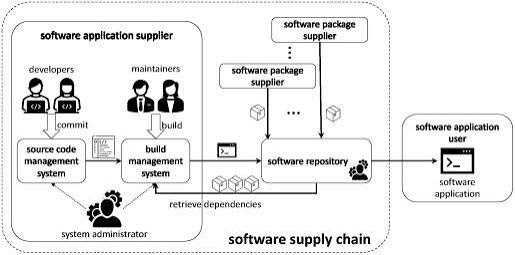
Software supply chain attacks target trusted components used during software development. Instead of attacking the final application, cybercriminals compromise software packages, third-party libraries, build systems, developer accounts, or deployment pipelines.
Common attack methods include malicious open-source packages, dependency confusion attacks, compromised software updates, stolen developer credentials, insecure CI/CD pipelines, and code injection. These attacks often remain undetected until the compromised software reaches production environments.
Key Features of a Secure Software Supply Chain
A secure software supply chain relies on several essential security controls that reduce vulnerabilities and improve software integrity.
Dependency Management
Organizations should continuously monitor third-party libraries and open-source dependencies to identify outdated or vulnerable components before deployment.
Software Bill of Materials (SBOM)
SBOM provides complete visibility into every software component, making vulnerability tracking and compliance management much easier.
Code Signing
Digitally signing software verifies authenticity and helps prevent unauthorized code modifications during distribution.
Vulnerability Scanning
Automated security scanning identifies known vulnerabilities early, allowing development teams to fix issues before software is released.
CI/CD Pipeline Security
Protecting build servers, deployment pipelines, and automation tools helps prevent attackers from injecting malicious code into software releases.
Continuous Monitoring
Real-time monitoring allows organizations to detect suspicious activities, security incidents, and software integrity issues before they become critical threats.
Benefits of Software Supply Chain Security
Implementing strong software supply chain security provides multiple business and technical benefits.
- Reduces software supply chain attacks.
- Protects sensitive business and customer data.
- Improves software quality and integrity.
- Strengthens regulatory compliance.
- Accelerates vulnerability detection and remediation.
- Supports secure software development practices.
- Enhances customer trust and brand reputation.
- Improves overall cybersecurity resilience.
Best Practices for Securing Your Software Supply Chain
Organizations should verify every software dependency before deployment and regularly scan packages for vulnerabilities. Using Multi-Factor Authentication (MFA), least-privilege access controls, secure code repositories, and automated patch management significantly reduces security risks.
Security teams should also implement DevSecOps practices, maintain accurate SBOMs, perform continuous vulnerability assessments, monitor software updates, and adopt Zero Trust security principles. Regular employee security training further strengthens protection against software supply chain attacks.
Common Software Supply Chain Risks
Despite improved security technologies, organizations continue to face several common risks.
- Vulnerable third-party libraries
- Malicious open-source packages
- Dependency confusion attacks
- Compromised developer accounts
- Insecure CI/CD pipelines
- Software update tampering
- Weak access controls
- Delayed security patches
- Limited software visibility
- Insider threats
Understanding these risks enables organizations to develop stronger mitigation strategies and improve long-term software security.
Top Software Supply Chain Security Tools
Several security platforms help organizations secure the software development lifecycle.
- Snyk – Dependency scanning and vulnerability management.
- GitHub Advanced Security – Code scanning and secret detection.
- Sonatype Nexus Lifecycle – Open-source governance and software composition analysis.
- JFrog Platform – Secure software package management and artifact protection.
- Mend – Open-source security and license compliance.
- Socket – Detects malicious package behavior before installation.
Selecting the right security platform depends on your development environment, compliance requirements, and software delivery processes.
Future Trends in Software Supply Chain Security
Software supply chain security continues to evolve with emerging technologies. Artificial intelligence is improving threat detection by identifying unusual software behavior and prioritizing security risks. Predictive analytics, automated compliance reporting, and intelligent vulnerability management are becoming standard capabilities.
Organizations are also expanding the use of SBOMs, Zero Trust architectures, secure-by-design development, and cloud-native security solutions. As cyber threats become more sophisticated, continuous monitoring and automated security testing will play an increasingly important role in protecting modern software ecosystems.
Frequently Asked Questions
1. What is software supply chain security?
Software supply chain security protects software components, dependencies, build pipelines, and deployment processes from cyber threats throughout the software development lifecycle.
2. Why are software supply chain attacks increasing?
Organizations use more open-source software and third-party components, giving attackers additional opportunities to compromise trusted software before it reaches users.
3. What is an SBOM?
A Software Bill of Materials (SBOM) is a detailed inventory of all software components and dependencies used within an application.
4. Which industries need software supply chain security?
Healthcare, finance, government, manufacturing, retail, technology, telecommunications, and cloud service providers all require strong software supply chain security.
5. What are the best practices for software supply chain security?
Organizations should implement dependency scanning, SBOM management, DevSecOps, code signing, vulnerability management, secure CI/CD pipelines, Zero Trust security, and continuous monitoring.
Conclusion
Software supply chain security has become an essential part of modern cybersecurity strategies as organizations increasingly depend on open-source software, cloud services, and third-party vendors. Keeping up with software supply chain security updates today enables businesses to identify emerging threats, strengthen software integrity, and reduce the risk of supply chain attacks. By implementing secure development practices, maintaining accurate SBOMs, adopting DevSecOps, continuously scanning dependencies, and using trusted security tools, organizations can build a resilient software supply chain that supports long-term business growth, regulatory compliance, and customer trust. A proactive security strategy not only protects software assets but also prepares organizations for the evolving cyber threats of the future.